There was a time when “technology help” in a library might have meant showing someone how to use a computer mouse, or helping them print a document.
That time is long gone.
Today, technology touches nearly every aspect of library service and every department. Staff in all roles are expected to troubleshoot devices, navigate apps, assist with printing and scanning, understand new digital services, and field questions about AI… all while keeping up with the digital tools already in use and preparing for whatever comes next.
The result? Whether we signed up for it or not, almost everyone working in a library today has become a “tech person” to some degree. Expanding technology skills across an organization can be a very good thing, but there’s a huge difference between “everyone can help with technology” and “everyone is expected to know everything.”
Technology Confidence Is Not the Same as Knowing Everything
I’m a big believer in building technology confidence among library staff. Staff should feel comfortable trying unfamiliar things, troubleshooting basic problems, and helping patrons without immediately assuming that every technology question belongs to someone “more qualified” to handle it. But confidence doesn’t mean having every answer. It means being willing to find one.
That distinction matters. When we tell staff they need to become more comfortable with technology, the goal shouldn’t be to turn every employee into an IT specialist. That’s impossible. The goal should be to give them enough knowledge, practice, and support that they can approach a problem without immediately shutting down or passing it along to the next person.
At the same time, being comfortable with technology also means recognizing your own limitations. There will always be questions that require someone with more specialized knowledge. Knowing when you’ve reached that point, and when it’s time to ask for help, is a technology skill too. Confidence isn’t always “I can solve everything.” Sometimes, it’s “I can try, and I can recognize when I need help.”
Where Technology Burnout Starts
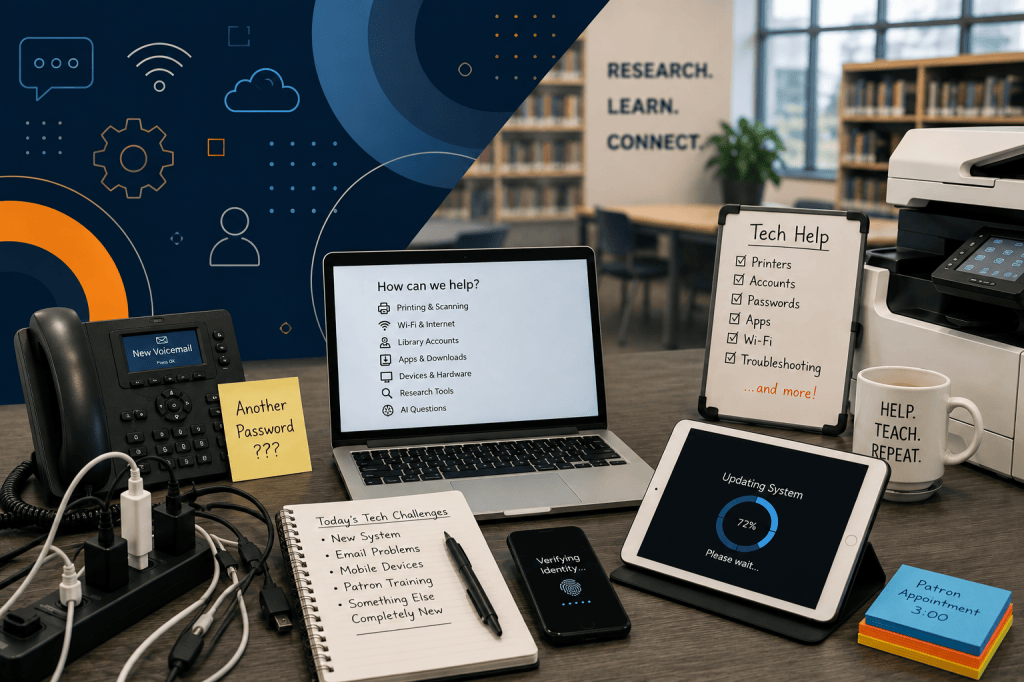
Technology burnout doesn’t usually come from learning one new system or answering one difficult question. It builds over time. A new database launches that staff need to learn. A once-familiar interface gets completely redesigned overnight. A printer that worked yesterday suddenly refuses to connect. A patron walks in with a device no one on staff has ever seen before. A software update moves every setting you knew how to find. A new app requires a new login, a new verification process, and a whole new set of instructions.
Individually, none of these things may seem overwhelming. Together, though, they add up.
The pressure can be especially intense for staff members who become known as the “tech people.” Once someone demonstrates that they’re comfortable with technology, questions often have a way of finding them. They become the person coworkers call when something stops working, the person patrons are referred to when a tech question gets too complicated, and sometimes the person expected to figure out technology they’ve never even seen before.
Over time, being everyone’s default troubleshooter can turn a strength into a source of frustration, especially when those constant interruptions begin competing with the work they’re supposed to be doing.
That creates an interesting challenge for libraries. We want technology knowledge to be shared across the organization, but we also need to recognize when technology responsibility starts falling on the same handful of people simply because they’ve proven they can handle it.
Building a Healthier Technology Culture
The answer isn’t to lower expectations around technology. Libraries need staff who are willing to learn, adapt, and help patrons navigate an increasingly digital world. But those expectations need to be matched with the time, training, and support staff need to meet them.
That means giving staff opportunities to practice new technologies before they’re expected to support them, creating documentation that people can actually use, encouraging coworkers to share what they know, and making it acceptable to say, “I don’t know, but let’s see if we can figure it out together.” It also means recognizing that handing a problem off to the most technologically confident person doesn’t help anyone else build confidence themselves.
Managers and technology staff have a role to play here too. Sometimes the most helpful thing we can do is resist the urge to immediately take over. Walking someone through a problem may take longer than simply fixing it ourselves, but that extra time can pay off. The next time that same problem comes up, they may be able to handle it on their own…and maybe even help someone else do the same.
It’s Okay to Have Boundaries
Not every technology problem is something library staff should be expected to solve, and even when a question is appropriate for library assistance, there are limits to how far that help should go. A patron might ask you to reset their banking password, hand you a credit card and ask you to make a purchase, want you to complete an online medical or legal form, or expect you to enter sensitive personal information on their behalf. Even something as simple as taking control of a patron’s phone or computer can become complicated when private messages, saved passwords, financial information, or other personal data are involved.
Boundaries also matter internally. When one employee becomes the default person for every technology question, they can quickly find themselves being pulled away from their own work to troubleshoot problems for everyone else. That isn’t a sustainable approach to technology support. Libraries need clear expectations about what staff should be able to handle independently, when it makes sense to ask for help, and when a problem requires someone with more specialized knowledge.
Everyone Can Be a Tech Person. No One Has to Know Everything.
Technology is going to keep changing, and the role it plays in libraries is only going to grow. And this is a good thing. But the goal shouldn’t be to make every staff member an expert in every new tool. It should be to create an environment where people feel comfortable learning, experimenting, asking questions, and helping one another.
A healthy technology culture is built on confidence without the expectation of expertise. It isn’t about everyone knowing everything. It’s about giving people the confidence to try, the support to keep learning, and the judgment to know when it’s time to ask for help.
Tag: technology-burnout
-
When Everyone Becomes the Tech Librarian

